
Industry 4.0 for the ACE business: A new and digital way to work.
Sweden has EU's highest construction costs. There is a lack of capacity in the sector as well as a large shortage of housing. At the same time reports show that the AEC is lagging behind other sectors when it comes to increasing productivity through digitization. We are exploring a completely digital construction process, learning from other industries that is more advanced in using digital tools.
A completely digital process allows automatization and new ways to work. We believe that construction should be driven by 100% digital information and with maximal production of whole elements in factories, including the use of robots, 3D printers etc. We will enter what is called Industry 4.0. This will result in lower costs, shorter lead times and allowing more innovative buildings.
Practical applications of building ships on the ground
Today’s construction processes are governed by a wide range of drawings, specifications, and documents. These are produced by a fragmented design and engineering organization. Data models are used, but they are incomplete and serve only as supplementary resources. This differs from other manufacturing industries, where teams work in close collaboration and data models are the primary source of information, governing contracts, production, and machinery.
Here we tested Construction 4.0 tools and working methods from a manufacturing industry, shipbuilding, on two real-world residential construction projects. The results are striking. (Link to the report)
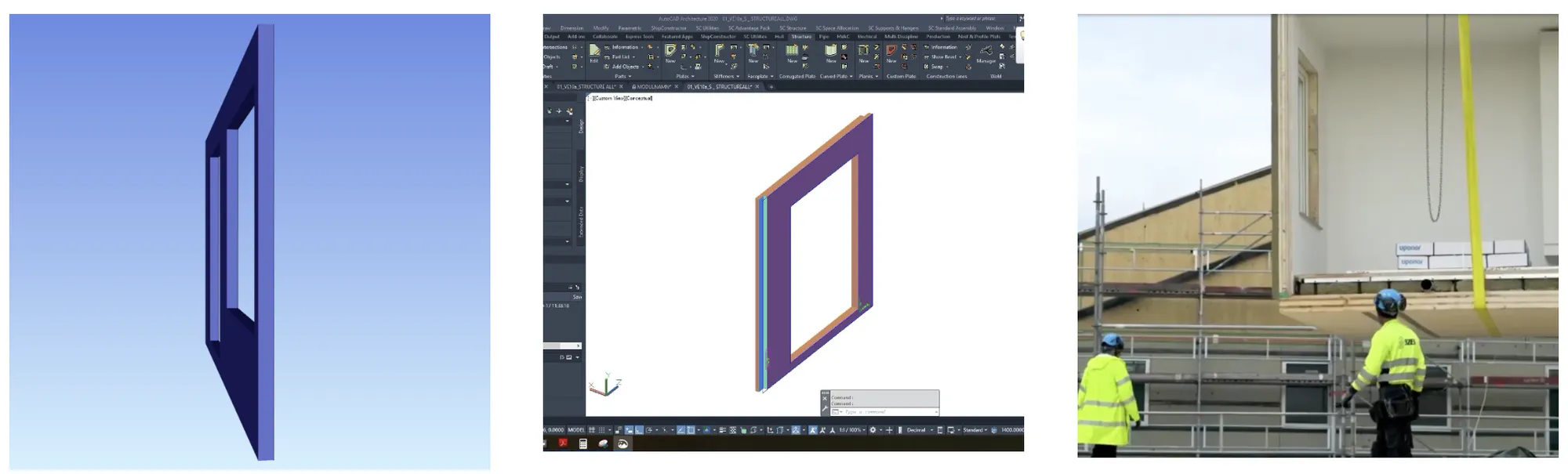
New report: Building Ships on Ground - How principles from shipbuilding can increase efficiency in the construction industry
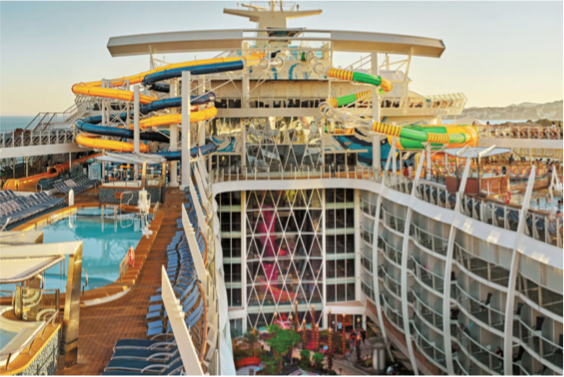
Link to the report is here.
We are foucussing four areas:
A collaborative, integrated design process spanning architecture, estimating, engineering and planning.
Digital prototyping and simulations of the actual construction to plan and make it more effective
Digitally controlled automation of production of elements and installation
Internet of things (Io) where digital systems replaces analogue ones and increase flexibility and control.
Kickstart of Build 4.0 in Sweden
The first projekt will work during 2017-2020 and focus four tasks:
Presenting a blueprint for a completly digital construction process. This is the key task!
Gather examples and cases that display key parts of such a process
Supporting actual construction projects in applying this
Establishing a hub for startups to create a "BuildTech" scene in Sweden.
Partners:
The partners represent a turn-over of more than $ 10 BN and approx 20% of all residential development in Sweden.
SABO - the Swedish Association of Public Housing Companies - is the organisation of the municipality owned public housing companies in Sweden. SABO's 300 member companies manage some 800 000 apartments all together.
Lead: Jonas Högset, Manager Property DevelopmentVeidekke - Scandinavia's fourth largest construction and residential development company. Veidekke is a fore-runner in digitally supported construction. For instance Veidekke is teaming up with Stanford University applying the Virtual Design and Construction approach.
Lead: Emile Hamon, Chief Strategy and Development OfficerCementa - one Sweden's largest suppliers for construction materials and is part of world leading Heidelberg Cementgruppe. Cementa is working on digitization in several areas. One example is the development of IoT sensors that are put into the concrete to measure actual hardening, saving time and increasing quality.
Lead: Robert Larsson, Digitization ManagerÖbo - Örebro Bostäder is with 23 000 apartments and a large portfolio of new developments a major Swedish housing company, owned by the City of Örebro. Öbo is for instance a leader is digital energy management and is setting up an IoT lab.
Lead: Jan Dahlkvist, Chief Construction OfficerTechniaTranscat: TechniaTranscat is a leading global supplier of Product Lifecycle Management (PLM) solutions for creating and managing product information throughout the entire product lifecycle, from product planning, development and design to production, sales, training and support. Customers include Volvo, Scania, HM, Husqvarna.
Lead: Rehan Chaudry, Sales Executive and Business DeveloperMaestro Design & Management: Innovation Management Consultants with experience from digital innovations for IKEA, Volvo, SEB. Also experience from relocation of cities, for instance Kiruna & Malmberget.
Lead and projekt manager: Lars Albinsson
Contact: Lars Albinsson, lars.albinsson@maestro.se, +46 (0) 70-592 70 45
The work is supported by Smart Built Environment, the Swedish Research Council Formas and the Swedish National Board of Housing, Building and Planning.